Architecting for Scale: Battle-Tested Scalability Patterns Across AWS, Azure, and GCP (Part 1/5)
Series Foreword: Demystifying Complex Cloud Systems Through Design Patterns
As an active Multi-Cloud Architect across AWS, Microsoft Azure, and GCP—having recently earned my Google Cloud Certified Professional Cloud Architect credential in July 2026 (See my achievement on Credly)—peers and aspiring cloud engineers often ask me the same fundamental question: "How do you design, reason about, and scale complex distributed architectures without getting lost in vendor-specific services and endless tooling?" My answer is always rooted in the core foundations of software engineering: Architectural Patterns. Cloud providers give us building blocks, but patterns provide the blueprint. Complex distributed systems are not tamed by adopting new cloud services at random, they are mastered by applying time-tested architectural principles—decoupling, isolation, graceful degradation, and resilience—elevated to infrastructure-level scale. To bridge the gap between abstract design principles and battle-tested production reality, I have authored this 5-part deep-dive series for cloud architects, software engineers, and distributed systems practitioners:
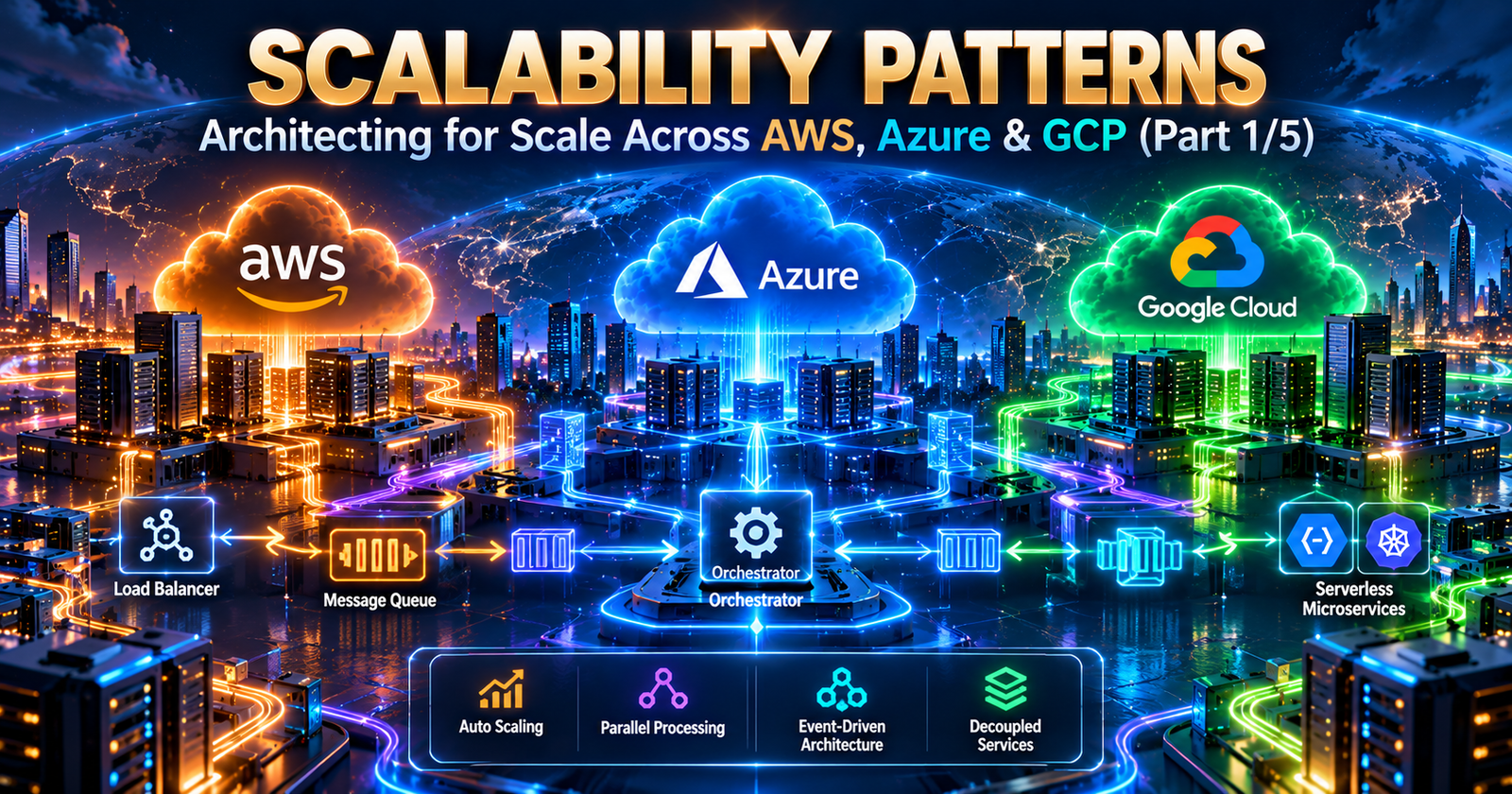
- Part 1/5: Scalability Patterns (Load Balancer, Pipes & Filters, Scatter-Gather, Execution Orchestrator, Choreography)
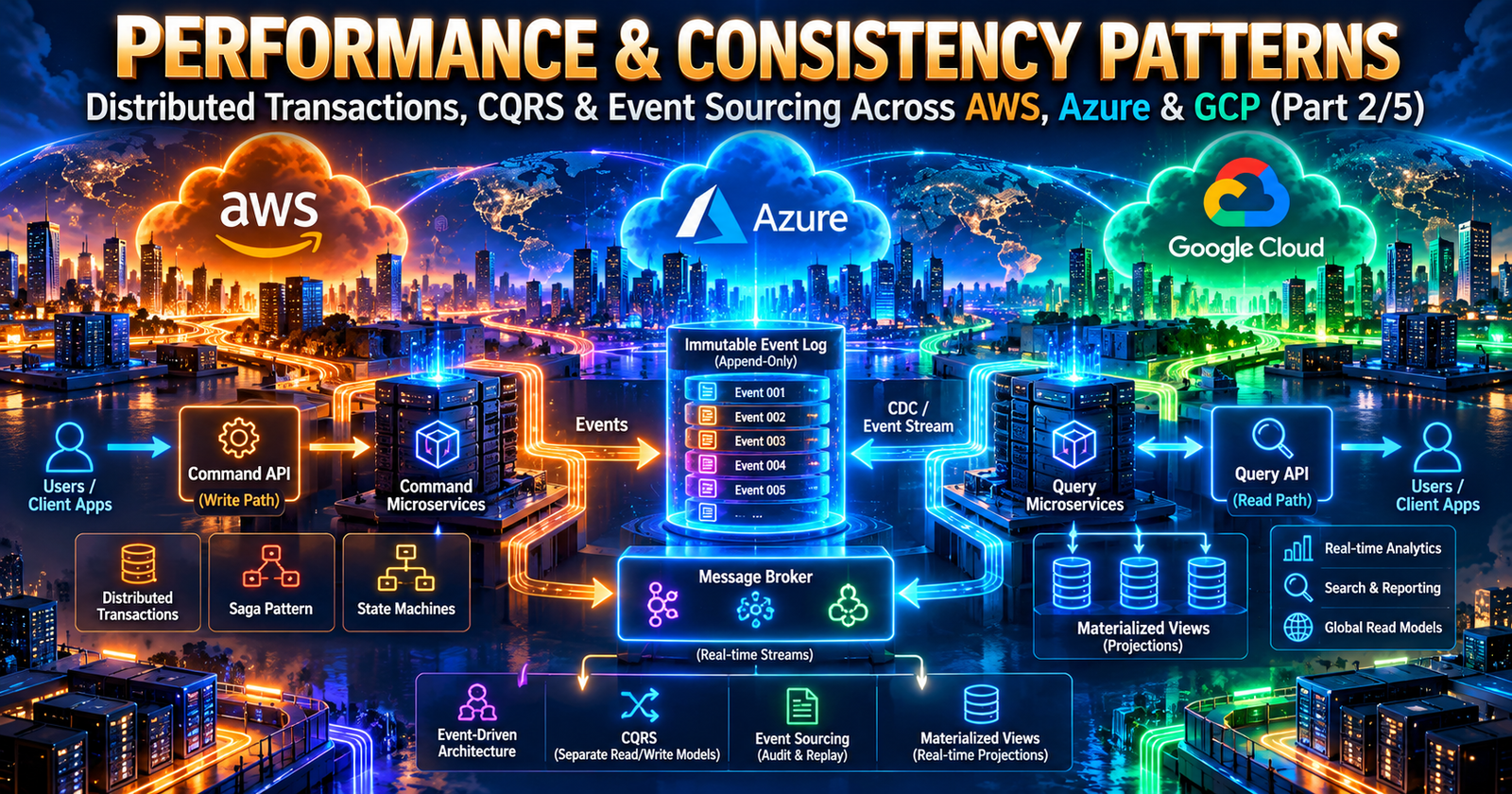
- Part 2/5: Performance & Data Consistency Patterns (MapReduce, Saga, Transactional Outbox, Materialized View, CQRS, Distributed CQRS with Materialized Views, Event Sourcing)
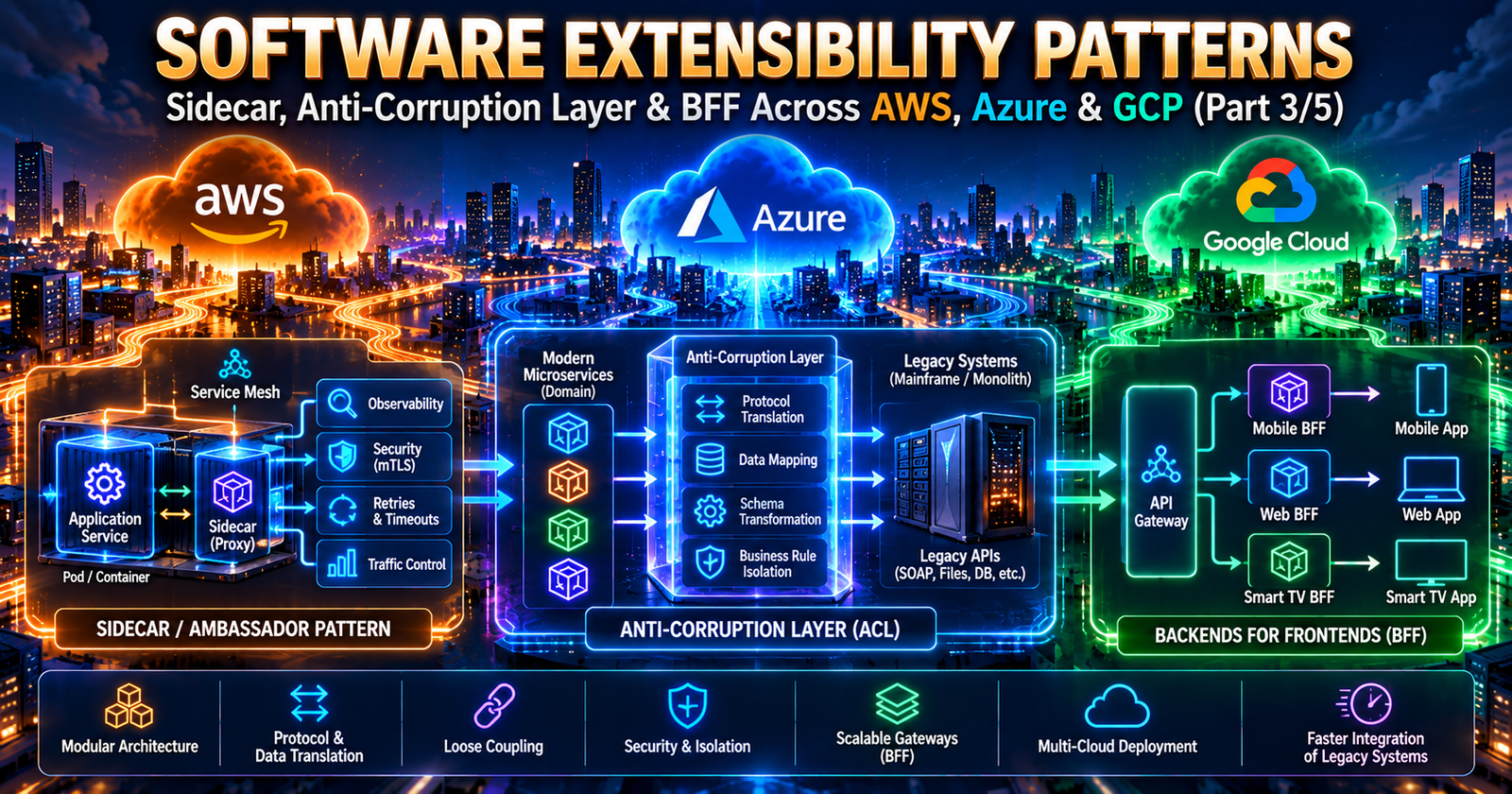
- Part 3/5: Software Extensibility Patterns (Sidecar & Ambassador, Anti-Corruption Layer, Backends For Frontends)
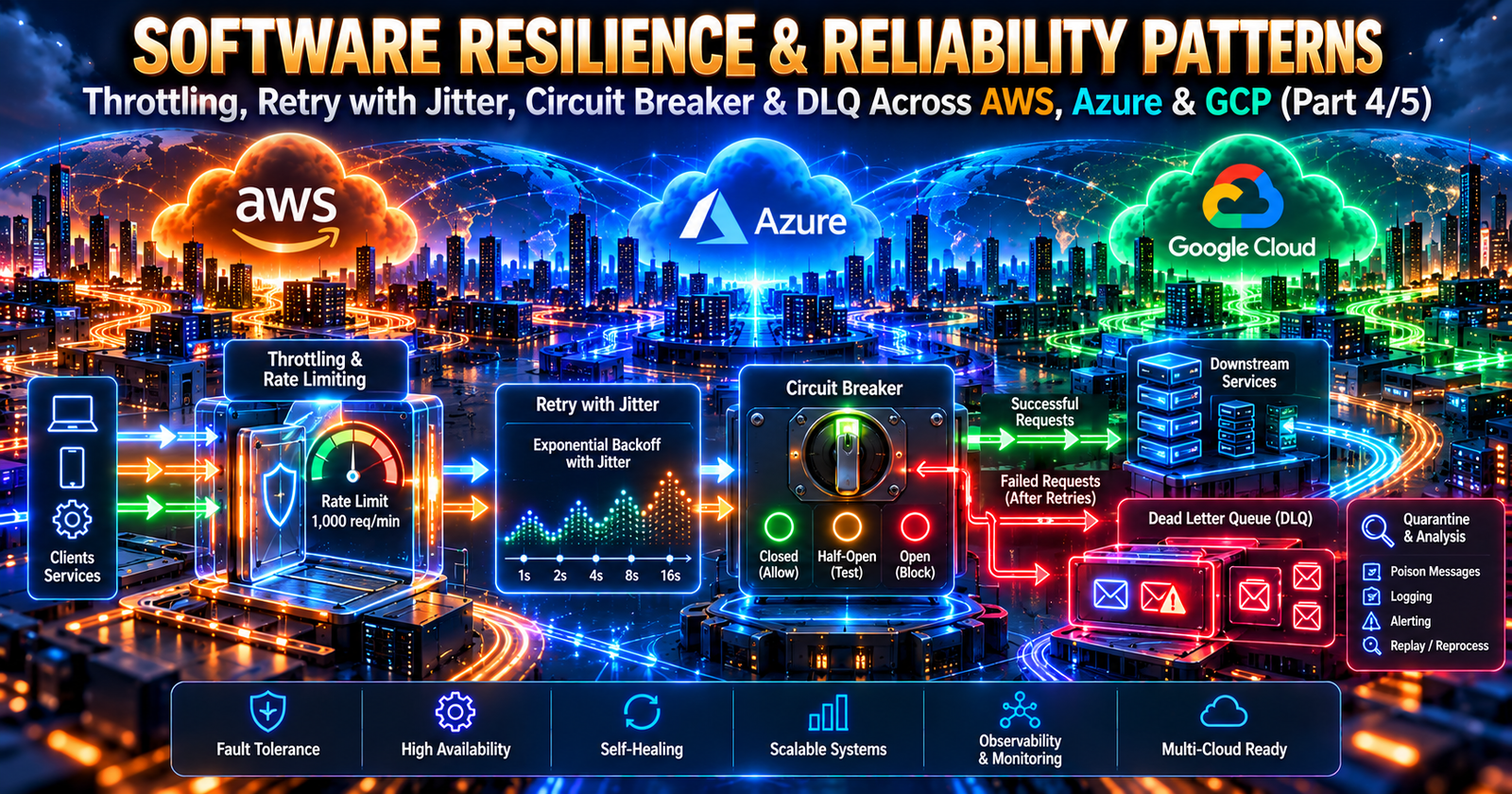
- Part 4/5: Reliability & Resilience Patterns (Retry with Exponential Backoff & Jitter, Circuit Breaker, Dead Letter Queue)
- Part 5/5: Modern Deployment & Resilience Validation Patterns (Rolling Deployment, Blue-Green Deployment, Canary Release & A/B Testing, Chaos Engineering)
Across each pattern, this series explores the foundational software design principles, critical architectural trade-offs, and failure recovery semantics, paired with concrete multi-cloud implementation matrices and real-world architectures spanning Amazon Web Services (AWS), Microsoft Azure, and Google Cloud Platform (GCP).
👉 In this edition, we dive into Part 1/5: Scalability Patterns.
In modern cloud engineering, scalability is no longer defined merely by vertical instance sizing or rudimentary autoscaling policies. As distributed applications absorb unpredictable workloads, integrate heterogeneous microservices, and span global environments, systemic bottlenecks shift from raw compute limits to:
- Coordination overhead
- Routing friction
- Asynchronous state synchronization
Importantly, these architectural challenges are not entirely new. The patterns driving modern distributed scalability trace their intellectual lineage directly back to classic software design disciplines—spanning enterprise integration patterns, Unix modular pipeline philosophies, object-oriented behavioral design, and distributed transaction semantics.
Just as foundational principles like separation of concerns, single responsibility, and loose coupling transformed monolithic codebases into maintainable software, their cloud-native evolutions now govern how independent services communicate across network boundaries.
The cloud has not rendered traditional design principles obsolete, it has elevated them to infrastructure-scale primitives.
Without these foundational abstractions, distributed systems easily succumb to anti-patterns, most notably the dreaded "distributed monolith," where tight coupling, hidden temporal dependencies, and cascading failures negate the elastic promise of cloud infrastructure.
To navigate these challenges systematically, software engineers and cloud architects rely on five battle-tested Scalability Patterns adapted for modern cloud ecosystems:
- Load Balancer Pattern Establishing elastic ingress, intelligent Layer 4/Layer 7 traffic routing, and health-checked scaling boundaries.
- Pipes and Filters Pattern Decomposing complex data processing pipelines into discrete, decoupled, and independently scalable transformation filters connected through durable messaging buffers.
- Scatter-Gather Pattern Parallelizing broadcast queries across distributed execution nodes (fan-out) and aggregating heterogeneous responses (fan-in) to minimize query latency.
- Execution Orchestrator Pattern Centralizing workflow coordination, state machines, and transactional recovery semantics to govern multi-step business transactions without turning the orchestrator into a domain monolith.
- Choreography Pattern Decentralizing workflow execution through asynchronous event emission and reactive subscriptions, maximizing domain boundary isolation, team autonomy, and horizontal throughput.
Across each pattern, this article explores:
- Underlying software design principles
- Critical trade-offs and failure recovery semantics
- Concrete multi-cloud implementation matrices and real-world architectures across Amazon Web Services (AWS), Microsoft Azure, and Google Cloud Platform (GCP).
Pattern 1: The Load Balancing Pattern (Scalability)
The Load Balancing Pattern ensures that incoming traffic or compute tasks from senders are distributed so that each request is processed by only one worker at a time. This eliminates single points of failure (SPOFs), avoids resource starvation, and provides the fundamental entry point for dynamic elasticity.
1. Core Architectural Constraints
Dispatch and traffic distribution strategies rely on three operational dimensions:
- Statelessness vs. Stateful Workloads: Stateless services allow pure round-robin or least-connections distribution. Stateful applications require session affinity (sticky sessions via cookies or IP hashing), which introduces hotspotting risks and complicates zero-downtime rolling deployments.
- Connection Lifecycle: Short-lived HTTP requests benefit from Layer 7 (Application) path- and header-based routing, whereas persistent TCP/UDP streams (such as gRPC or WebSockets) require Layer 4 (Transport) passthrough to minimize latency and avoid abrupt connection terminations.
- Autoscaling Synergy: The load balancing tier actively evaluates node health probes, automatically draining unhealthy workers while registering dynamically provisioned compute nodes.
2. Architectural Topologies
Load balancing in modern distributed architectures takes one of two primary architectural topologies:
Topology A: Synchronous Push Model (Cloud Load Balancer)
A reverse-proxy cluster receives inbound connections, handles SSL/TLS termination, performs health checks, and pushes traffic directly to an auto-scaled fleet of worker nodes.
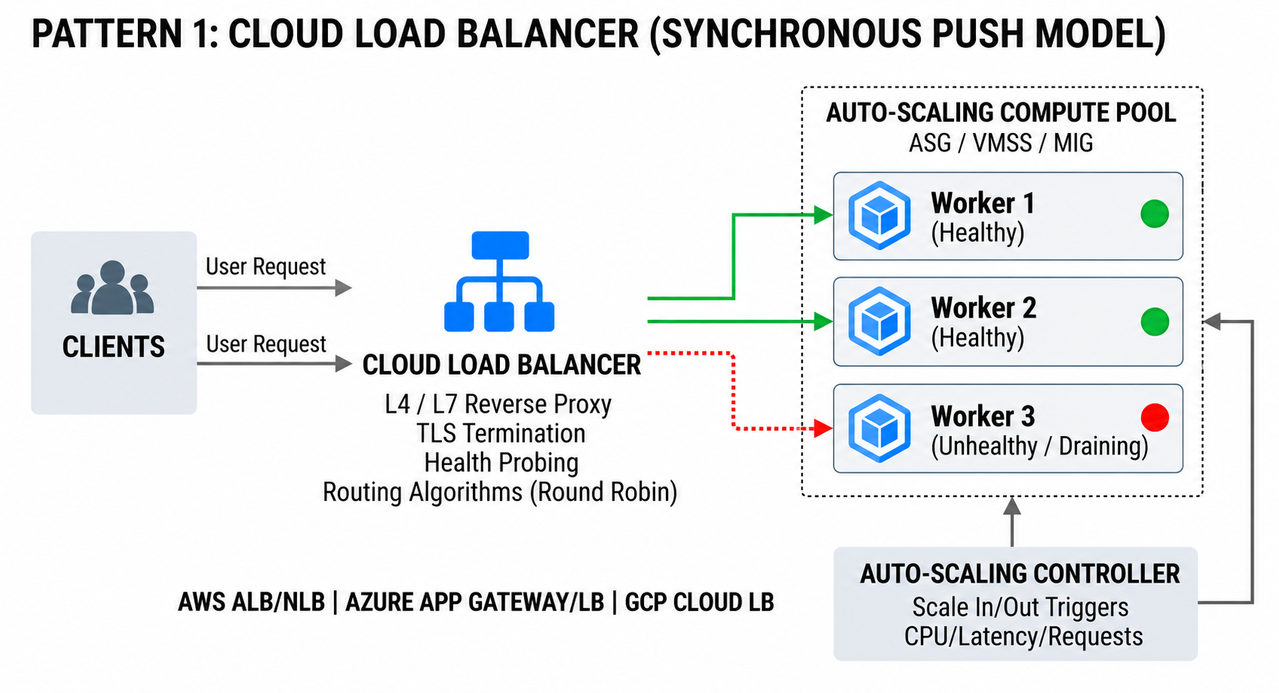
Figure 1: Synchronous Reverse Proxy Load Balancing with Health Checks and Dynamic Scaling. (Source: Author's own illustration)
Topology B: Asynchronous Pull Model (Message Broker / Load Leveling)
Producers enqueue jobs into a managed message broker. Competing consumers pull tasks from the queue; visibility locks guarantee that only one worker claims each task, absorbing sudden burst traffic without saturating backend services.
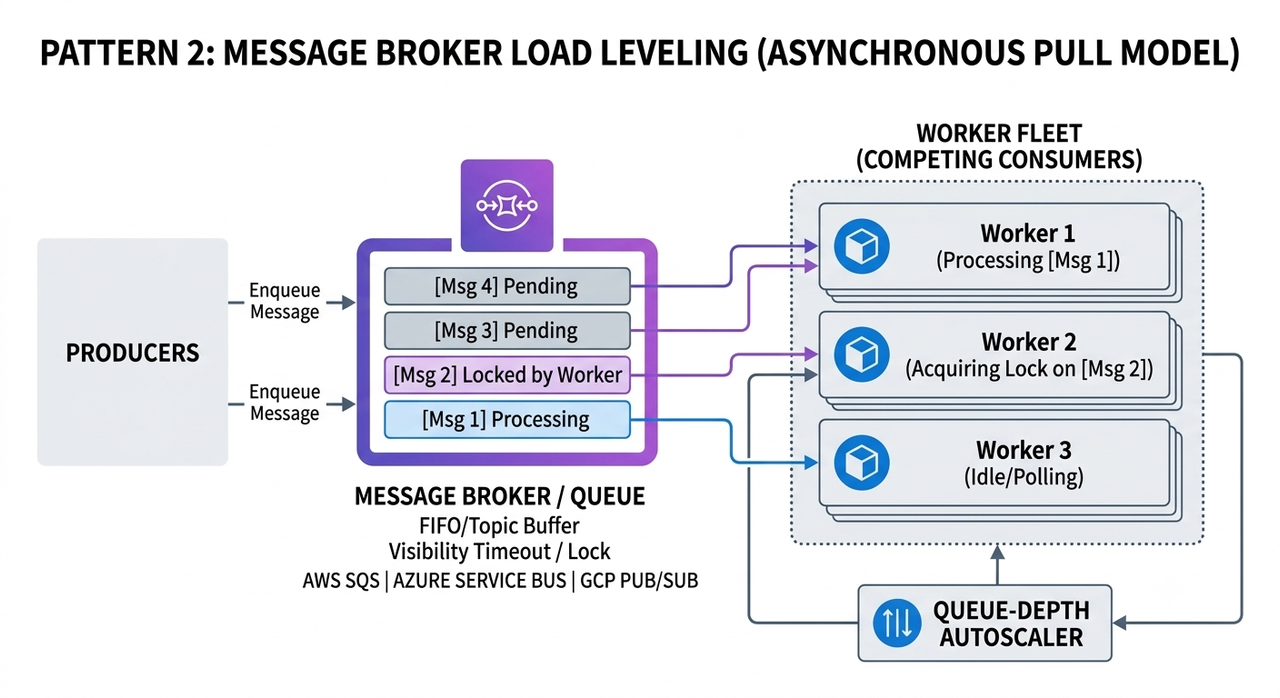
Figure 2: Queue-Based Load Leveling with Competing Consumers and Visibility Timeouts. (Source: Author's own illustration)
3. Cross-Cloud Implementation Matrix
Modern cloud ecosystems provide specialized managed services to support both Layer 4/Layer 7 routing and elastic autoscaling integration across AWS, Azure, and GCP.
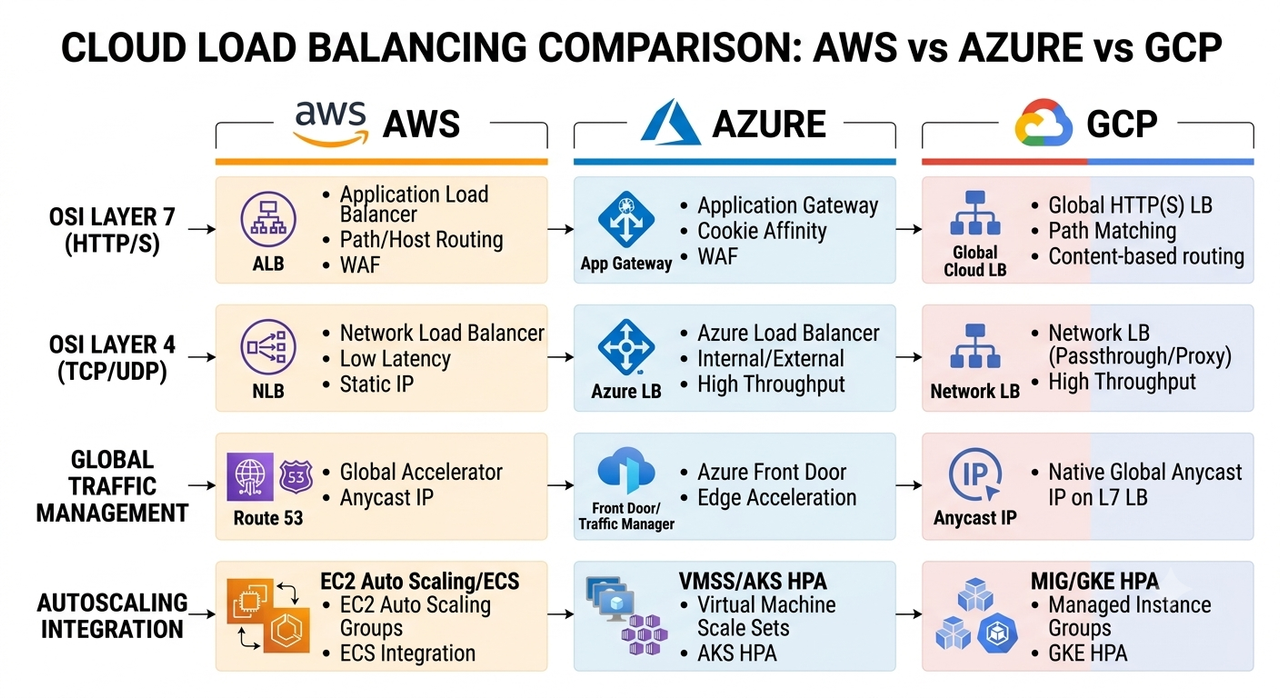
Figure 3: Managed Service Matrix across AWS, Azure, and Google Cloud Platform. (Source: Author's own illustration)
Comparative Reference Table
| Capability / Tier | Amazon Web Services (AWS) | Microsoft Azure | Google Cloud Platform (GCP) |
|---|---|---|---|
| OSI Layer 7 (HTTP/S) | Application Load Balancer (ALB) | Azure Application Gateway | Cloud Load Balancing (External HTTP/S) |
| OSI Layer 4 (TCP/UDP) | Network Load Balancer (NLB) | Azure Load Balancer | Network Load Balancer (Passthrough/Proxy) |
| Global Anycast Ingress | AWS Global Accelerator + Route 53 | Azure Front Door / Traffic Manager | Native Global Anycast IP on Cloud LB |
| Asynchronous Queue / Broker | Amazon SQS | Azure Service Bus (Queues) | Cloud Pub/Sub |
| Autoscaling Target Engine | EC2 Auto Scaling Groups (ASG) / ECS | Virtual Machine Scale Sets (VMSS) / AKS HPA | Managed Instance Groups (MIGs) / GKE HPA |
| Session Stickiness Support | Duration & Application Cookies | Cookie-based Session Affinity | Generated Hash / Cookie Affinity |
4. Key Engineering Trade-offs
- Synchronous vs. Asynchronous: Synchronous load balancing delivers immediate feedback and is suitable for user-facing APIs, but exposes backends to unbuffered traffic surges. Asynchronous queuing isolates backends from traffic spikes, but introduces eventual processing latency and requires idempotent retry logic.
- Layer 4 vs. Layer 7: Layer 4 delivers wire-speed throughput and minimal overhead, but cannot inspect URL paths, auth headers, or cookies. Layer 7 allows advanced routing rules and WAF security inspection at the expense of TLS re-encryption and packet evaluation compute.
- Connection Draining (Deregistration Delay): Always enforce connection draining on load balancers. When the autoscaler triggers a scale-in event, draining ensures in-flight transactions terminate cleanly before the node shut-down sequence initiates.
Pattern 2: The Pipes and Filters Pattern (Scalability)
The Pipes and Filters Pattern decomposes a complex processing task into a series of discrete, independent components (Filters), connected by asynchronous communication channels (Pipes). Like water flowing downstream, data is processed, transformed, or filtered as it passes through each consecutive stage.
This architecture directly addresses the linear processing bottlenecks and compute resource exhaustion of monolithic systems, enabling parallel execution and dynamic, independent scaling for each operational stage.
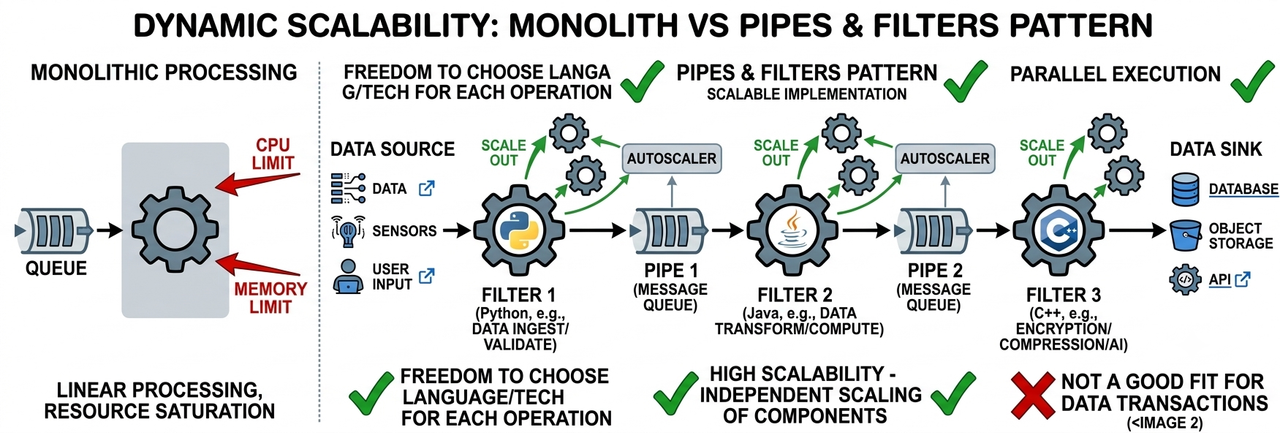
Figure 4: Dynamic Scalability: Monolithic Architecture vs. The Pipes & Filters Pattern. (Source: Author's own illustration)
1. Core Architectural Analysis
The cornerstone of this pattern is decoupling compute execution (Filters) from transport and buffering (Pipes). This structural boundary empowers engineering teams to tailor each Filter's operational profile to its distinct workload demands, chosen runtime tech stack, and scaling characteristics:
- Data Source: The entry boundary where raw, incoming payloads enter the pipeline (e.g., direct object file drops, high-frequency IoT telemetry streams, or synchronous API ingress points).
- Filter (Stateless Processor): A self-contained, single-purpose worker node dedicated to an atomic computational task. Filters must remain strictly stateless to allow elastic horizontal scale-out; should any execution node terminate unexpectedly, an adjacent worker can immediately claim and resume the work item.
- Pipe (Asynchronous Buffer): The decoupled communication medium routing records between adjacent Filters. Pipes are typically realized via durable managed queues or partitioned streams that absorb incoming traffic shocks, providing robust load leveling.
- Data Sink: The terminal persistence stage where fully processed, sanitized, and enriched records land (such as an analytical data warehouse, a structured data lake, or production datastores).
2. Real-World Multi-Cloud Architectures (AWS vs. Azure vs. GCP)
While the conceptual paradigm remains universal, AWS, Microsoft Azure, and Google Cloud Platform each translate this pattern using specialized managed primitives optimized for distinct pipeline workloads:
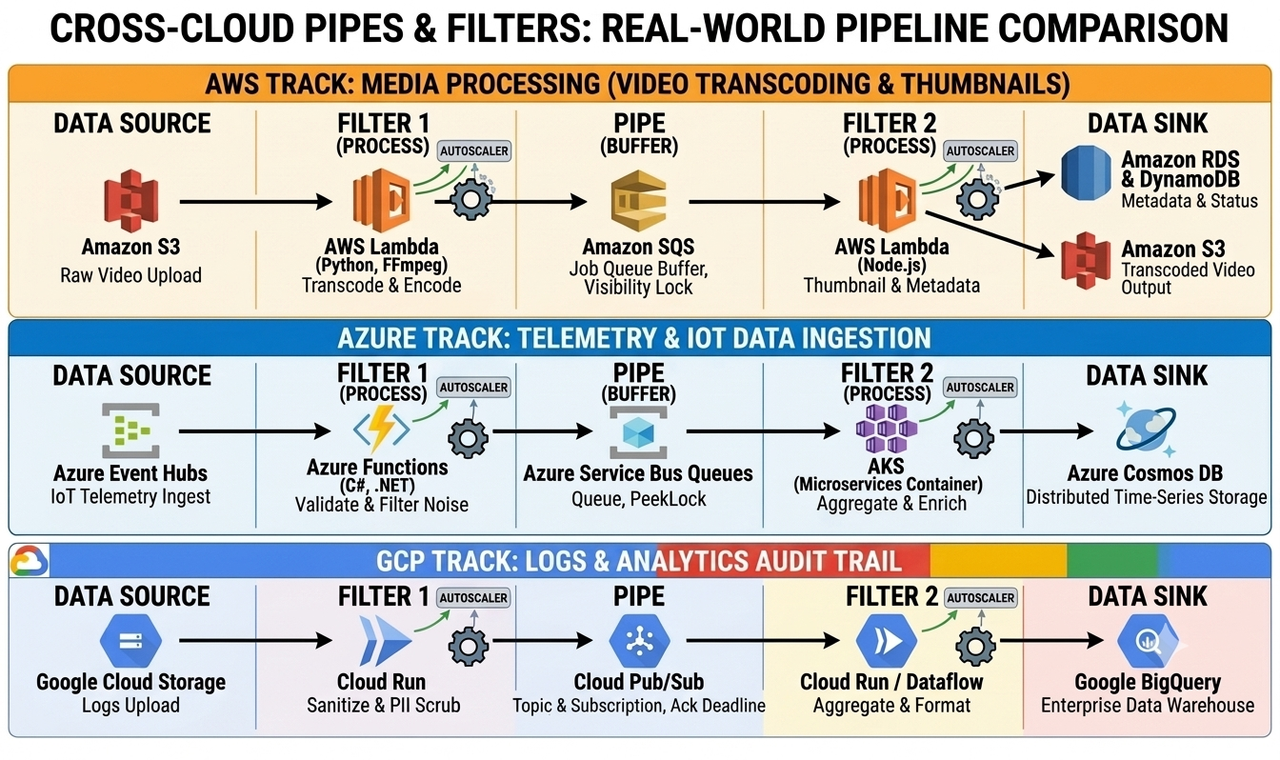
Figure 5: Cross-Cloud Pipes & Filters Production Architectures across AWS, Azure, and Google Cloud. (Source: Author's own illustration)
- AWS (Media Transcoding Track): Inbound video uploads land in Amazon S3, triggering an asynchronous compute step via AWS Lambda running FFmpeg. The output payload is handed off to an Amazon SQS buffer, allowing downstream worker tasks (thumbnail extraction, automated tagging) to scale out independently before final persistence in DynamoDB and S3.
- Azure (IoT & Telemetry Processing): High-throughput device events stream into Azure Event Hubs, validated by lightweight Azure Functions (.NET/C#). The scrubbed telemetry transitions through Azure Service Bus Queues using explicit
PeekLocksemantics before containerized worker pods on Azure Kubernetes Service (AKS) aggregate and commit the data into Azure Cosmos DB. - Google Cloud (Audit Trail & Log Ingestion): Unstructured logs arriving in Cloud Storage trigger Cloud Run containers for automated PII masking and data sanitization. Records stream across Cloud Pub/Sub topics toward downstream Dataflow/Cloud Run pipelines, landing in Google BigQuery for real-time analytics.
3. Comparative Reference Table
| Capability / Tier | Amazon Web Services (AWS) | Microsoft Azure | Google Cloud Platform (GCP) |
|---|---|---|---|
| Pipes (Asynchronous Channels) | Amazon SQS / Amazon Kinesis Data Streams | Azure Service Bus Queues / Azure Storage Queues / Azure Event Hubs | Google Cloud Pub/Sub |
| Filters (Stateless Compute) | AWS Lambda / Amazon ECS / Amazon EKS | Azure Functions / AKS / Azure Container Instances (ACI) | Google Cloud Run / GKE / Cloud Functions |
| Data Source & Event Ingress | S3 Event Notifications / Kinesis / AWS IoT Core | Blob Storage Events / Event Hubs / Azure IoT Hub | Cloud Storage Events / Cloud Pub/Sub / IoT Core |
| Data Sink & Terminal Storage | Amazon DynamoDB / Amazon RDS / S3 / Amazon Redshift | Azure Cosmos DB / Azure SQL Database / Azure Blob Storage | Google BigQuery / Cloud Firestore / Google Cloud Storage |
| Key Architectural Synergies | Tight event integration between AWS Lambda and SQS utilizing competing consumers | Advanced lock controls (PeekLock) and message deduplication in Azure Service Bus | Unified global Anycast ingress, autoscaling serverless containers (Cloud Run), and streaming pipelines into BigQuery |
4. Key Engineering Takeaways
- Target Workloads: The Pipes and Filters pattern shines in unidirectional, multi-stage data pipelines such as streaming media transcoding, high-frequency IoT data ingestion, and compliance-driven audit scrubbers.
- Operational Complexity & Observability: Because work execution is distributed across dynamic, ephemeral stages, troubleshooting requires end-to-end distributed tracing frameworks (such as AWS X-Ray, Azure Monitor, or Google Cloud Trace) and unified correlation IDs attached to every transaction payload.
- ACID Consistency Constraint: This pattern is fundamentally unsuitable for transactional operations requiring multi-stage atomicity or synchronous distributed rollbacks. Loosely coupled pipes and horizontal scaling rely on eventual consistency; if strict ACID properties are mandatory, look toward orchestrator- or transaction-governed alternatives.
Pattern 3: The Scatter-Gather Pattern (Scalability)
The Scatter-Gather Pattern is a distributed architectural pattern designed to achieve high throughput and predictable response times by parallelizing independent sub-tasks across multiple workers and consolidating their partial results into a unified outcome.
1. Core Operating Principles
The pattern executes across three distinct phases:
- Scatter (Dispatch): A Dispatcher receives a query or task from a Requester (e.g., an end user or client web application). Instead of executing operations sequentially, the Dispatcher fragments the workload or broadcasts requests across multiple Workers concurrently, often utilizing an asynchronous event bus or messaging topic to maintain loose coupling.
- Parallel Execution: Each Worker processes its assigned slice of computation or queries its specific data shard independently and simultaneously. This isolation prevents compute or memory bottlenecks on any single node.
- Gather (Aggregation & Consolidation): Rather than blindly dumping data into a passive storage sink, the partial results are returned to an Aggregator (or stateful workflow orchestrator). The Aggregator performs three critical tasks:
- Matches incoming responses to the original request using a unique Correlation ID.
- Enforces an upper wait limit (Timeout) to prevent lagging or failed workers from blocking the overall process.
- Constructs a consolidated (or gracefully degraded) response to return to the client or persist into a state store.
2. Key Architectural Considerations & Trade-offs
- Tail Latency Sensitivity (The Straggler Problem): In any fan-out topology, overall latency is bounded by the slowest responding worker (the 99th percentile latency issue). Configuring aggressive timeouts at the aggregator tier ensures that lagging nodes do not degrade the end-user experience.
- Worker Volatility & Graceful Degradation: Downstream dependencies or third-party APIs can become unreachable or fail unexpectedly. The aggregator must handle partial failures gracefully by returning an incomplete yet functional response (e.g., displaying airline fares from 9 out of 10 providers if one partner API times out).
- Stateful Gathering Complexity: While the dispatcher can remain entirely stateless, the aggregation tier must manage intermediate state (in memory or via an ephemeral data store like Redis or DynamoDB) to track arriving payloads before emitting the final consolidated result.
- Network & Connection Pool Amplification: A single incoming client call instantly multiplies into $N$ downstream calls. Infrastructure teams must carefully dimension connection pools and monitor rate limits on target systems to prevent self-inflicted Denial of Service (DoS) conditions.
3. Cross-Cloud Implementation Matrix (AWS vs. Azure vs. GCP)
The following matrix provides a direct mapping of the core architectural components across AWS, Microsoft Azure, and Google Cloud Platform:
| Architectural Component | Amazon Web Services (AWS) | Microsoft Azure | Google Cloud Platform (GCP) |
|---|---|---|---|
| Requester Ingress | Amazon API Gateway / Application Load Balancer | Azure API Management / Application Gateway | Apigee / Cloud Load Balancing |
| Dispatcher (Scatter) | AWS Lambda / Amazon ECS Fargate Tasks | Azure Functions / Azure Container Apps | Google Cloud Run / Cloud Functions |
| Decoupling Buffer (Pipe) | Amazon SNS (Fan-out to SQS) / EventBridge | Azure Service Bus (Topics) / Event Grid | Google Cloud Pub/Sub (Topics & Subscriptions) |
| Parallel Worker Fleet | AWS Lambda (Auto-concurrency) / ECS Tasks | Azure Functions (Consumption Plan) / AKS HPA | Google Cloud Run (Autoscaling) / GKE HPA |
| Orchestrator & Gather Control | AWS Step Functions (Parallel Map state, Native timeout and catch configurations) | Azure Durable Functions (Fan-out/fan-in pattern, Stateful result aggregation) | Google Cloud Workflows (Parallel branch execution, Integrated error handling and aggregation) |
| State Storage & Persistence | Amazon DynamoDB / Amazon S3 (for large payloads) | Azure Cosmos DB / Azure Blob Storage | Google Cloud Firestore / BigQuery |
4. Real-World Multi-Cloud Case Studies
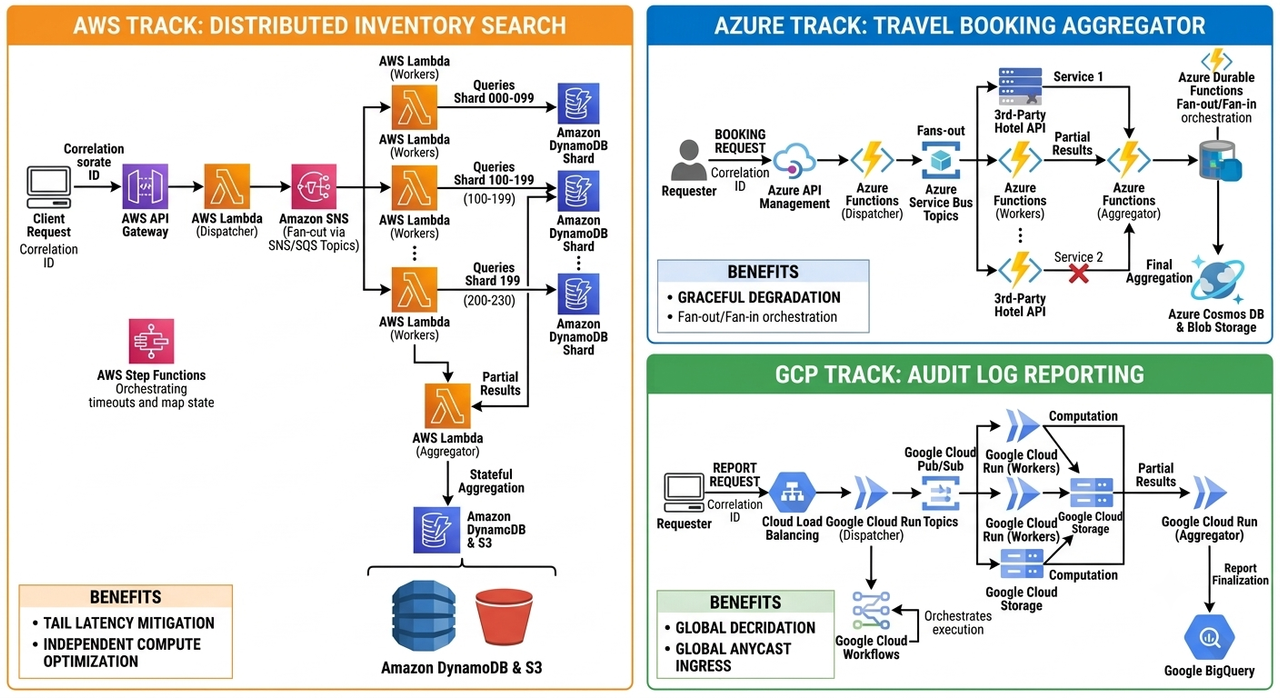
Figure 6: Cross-Cloud Scatter-Gather Architectures Across AWS, Azure, and Google Cloud. (Source: Author's own illustration)
AWS Track: Multi-Shard Inventory Search
- Request: An end user initiates an inventory search query via Amazon API Gateway.
- Scatter: An AWS Lambda dispatcher generates a unique correlation ID and broadcasts the query across an Amazon SNS topic connected to worker queues.
- Execution: A pool of Lambda workers queries designated shards of Amazon DynamoDB (e.g., partition 000–099, 100–199) in parallel.
- Gather: An AWS Step Functions state machine orchestrates the collection phase. An aggregation Lambda collates the partial lists into a single sorted payload, returns the response to the user, and records the session state in DynamoDB.
Azure Track: Multi-Vendor Travel Booking Aggregator
- Request: A price comparison request reaches Azure API Management.
- Scatter: An Azure Function acts as the dispatcher, generating a transaction ID and publishing the search event to an Azure Service Bus Topic.
- Execution: Worker instances of Azure Functions subscribe to the topic and query external third-party hotel and airline booking APIs simultaneously.
- Gather: An Azure Durable Function manages the fan-in logic. If a third-party vendor is unreachable or exceeds the timeout threshold (e.g., 1.5 seconds), the aggregator skips the straggler, compiles the successful quotes, saves the consolidated record to Azure Cosmos DB, and serves the results to the client.
GCP Track: Large-Scale Audit Log Reporting
- Request: An administrator initiates an on-demand security audit across petabytes of operational records.
- Scatter: A Google Cloud Run microservice segments the log search by date range and account boundaries, pushing dispatch instructions onto a Google Cloud Pub/Sub topic.
- Execution: Multiple Cloud Run worker containers pull tasks in parallel, parsing and running anomaly detection across segmented Google Cloud Storage buckets.
- Gather: Google Cloud Workflows synchronizes the incoming status payloads. A final aggregator service merges anomaly scores, formats the consolidated report, and loads the output directly into Google BigQuery for analytical querying.
Pattern 4: The Execution Orchestrator Pattern (Scalability & Resilience)
The Execution Orchestrator Pattern coordinates complex, multi-step workflows across distributed microservices architectures. Instead of having individual services communicate through uncoordinated peer-to-peer chains or bundling operations inside a monolithic block, a dedicated central service acts as the conductor. It determines execution sequences, manages state transitions, and coordinates fault recovery while leaving domain logic strictly inside individual worker services.
1. Core Operating Principles
- Centralized Workflow Brain: The orchestration service acts as a single centralized coordinator that understands the end-to-end execution flow. It invokes downstream services in order, passes intermediate data payloads, captures step outcomes, and triggers subsequent stages.
- Distinct from an API Gateway: An API gateway handles boundary concerns such as TLS termination, edge authentication, and path routing, whereas an orchestration service manages business flow context, execution dependency graphs, and sequential states.
- Separation of Orchestration and Domain Logic: The orchestrator coordinates process flows without embedding domain-specific business rules. Each downstream microservice retains isolated ownership of its domain logic.
- Serverless Resource Optimization: Specialist microservices execute only on demand, ensuring compute resources are billed solely while actively processing workflow steps rather than idling.
2. Key Architectural Considerations & Trade-offs
- The Over-Smart Orchestrator Trap: Embedding domain logic directly into the orchestrator creates a distributed monolith. The orchestrator must stay confined strictly to flow coordination and state transitions.
- Centralized Error Handling & Retries: When a downstream service fails or stops responding, the orchestrator manages retries, issues contextual failure logs, or surfaces structured errors back to the caller.
- Crash Recovery via State Database: Decoupling execution history and state checkpoints into a shared database allows replacement orchestrator instances to resume active transactions seamlessly if a worker node crashes or forms are resubmitted.
- Frictionless Stage Extensibility: Introducing a new workflow step requires adjusting only the orchestrator flow definition, leaving remaining downstream microservices uncoupled and unaffected.
3. Cross-Cloud Implementation Matrix (AWS vs. Azure vs. GCP)
The following matrix maps the core architectural components for orchestrating distributed workflows across AWS, Microsoft Azure, and Google Cloud Platform:
| Architectural Component | Amazon Web Services (AWS) | Microsoft Azure | Google Cloud Platform (GCP) |
|---|---|---|---|
| Ingress & Inbound Load Balancing | Amazon API Gateway / Application Load Balancer | Azure API Management / Application Gateway | Apigee / Cloud Load Balancing |
| Workflow Orchestration Engine | AWS Step Functions (Visual ASL state definitions, native retry and catch rules) | Azure Durable Functions / Logic Apps (Code-based or low-code orchestration, built-in state management) | Google Cloud Workflows (Declarative YAML/JSON syntax, managed serverless execution) |
| Domain Microservices | AWS Lambda / ECS Fargate Tasks | Azure Functions / Azure Container Apps | Google Cloud Run / Cloud Functions |
| State Persistence Store | Amazon DynamoDB / Step Functions Execution History | Azure Cosmos DB / Table Storage | Google Cloud Firestore / Cloud Spanner |
| Third-Party Integrations | AWS Secrets Manager + EventBridge HTTP Destinations | Azure Logic Apps Connectors + Key Vault | Google Cloud Workflows HTTP Connectors + Secret Manager |
4. Real-World Multi-Cloud Case Studies: User Registration on Video-on-Demand (VOD)
Subscriber onboarding on a Video-on-Demand platform serves as a standard multi-step workflow. The sequence coordinates account creation, third-party payment settlement, localized licensing checks, initial catalog recommendations, and confirmation email dispatch.
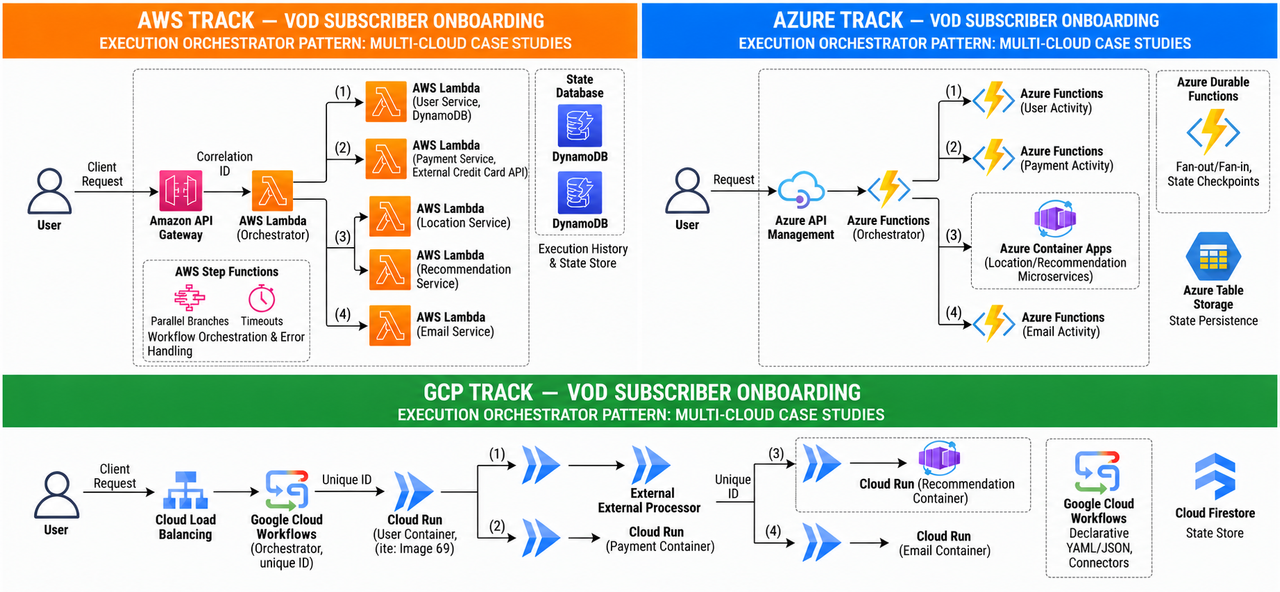
Figure 7: Execution Orchestrator Pattern Multi-Cloud Case Studies across AWS, Azure, and Google Cloud. (Source: Author's own illustration)
AWS Track: Video-on-Demand Subscriber Onboarding
- Ingress: A client registers via an Amazon API Gateway endpoint.
- Orchestration Engine: An AWS Step Functions state machine begins execution and logs the transaction correlation ID.
- Step Execution:
- Invokes a User Service Lambda to allocate user records, returning duplicate username errors immediately if detected.
- Invokes a Payment Service Lambda to process charges with an external credit card provider, using retry policies with exponential backoff on timeouts.
- Invokes Location Service and Recommendation Service Lambdas to set regional catalogs and initial recommendations.
- Triggers an Email Service Lambda to deliver onboarding notifications.
- State & Resilience: Intermediate state checkpoints are recorded natively in the execution history and backed by Amazon DynamoDB.
Azure Track: Video-on-Demand Subscriber Onboarding
- Ingress: The request enters through Azure API Management.
- Orchestration Engine: An Azure Durable Functions orchestrator coordinates workflow stages through async checkpoints.
- Step Execution:
- Executes an activity function for the User Service.
- Calls the Payment Service function to communicate with the external payment gateway.
- Triggers Location and Recommendation microservices deployed on Azure Container Apps.
- Dispatches the welcome notification via the Email Service worker.
- State & Resilience: Execution progress is automatically checkpointed into Azure Table Storage, preventing duplicate charging or lost state during host container restarts.
GCP Track: Video-on-Demand Subscriber Onboarding
- Ingress: Inbound traffic routes through Cloud Load Balancing into an API endpoint.
- Orchestration Engine: Google Cloud Workflows coordinates the pipeline declaratively.
- Step Execution:
- Triggers a Cloud Run container running User Service.
- Calls Payment Service on Cloud Run to process billing with the payment clearinghouse.
- Dispatches concurrent requests to Location and Recommendation Cloud Run services.
- Invokes the Email Service Cloud Run container to finalize customer communication.
- State & Resilience: Run state and error logs stream to Google Cloud Firestore and Cloud Logging, supporting fault isolation and transaction auditability.
Pattern 5: The Choreography Pattern (Distributed Scalability)
The Choreography Pattern is a distributed architectural pattern designed to coordinate complex business workflows without relying on a centralized controller. Instead of a central "orchestrator" driving the sequence, each independent microservice participates as a "dancer," knowing its individual role and reacting organically to events published by other services. This pattern utilizes asynchronous communication and a robust messaging pipeline to achieve massive scalability and loose coupling.
1. Core Operating Principles
The Choreography pattern operates through decentralized, reactive execution:
- Reactive Distributed Intelligence: There is no "master" server or centralized flow definition. Each service subscribes to specific event types and autonomously executes its business logic when those events are observed.
- Decoupled Async Communication: Services are fully decoupled, exchanging data asynchronously via message queues or event topics. The initiating frontend server enqueues a request and is immediately free; the flow continues in the background.
- Event-Driven Flow: The workflow advances as a series of events: Service A performs an action and publishes
ActionA_Complete. Service B, subscribed to that event, consumes the message, executes its task, and publishesActionB_Complete. - Specialist Worker Services: Individual worker services (serverless functions or containerized tasks) are highly specialized and stateless. They are billed only during the active milliseconds they process a message, optimizing costs.
2. Key Architectural Considerations & Trade-offs
- Massive Scalability & Agility: Choreography is highly extensible. New services can be added by simply subscribing to existing event topics, with zero impact or changes required for untouched, existing services, preventing regression. Organizational scaling is simplified as different teams manage isolated services with little friction.
- Fault Tolerance & Resilience: The pattern inherently handles partial service outages. If a non-critical worker (e.g., the Job Search Service) goes offline, the workflow is not blocked. Messages accumulate in the queue, and once the service recovers, it consumes the backlog and resumes operation without data loss.
- Observability & Troubleshooting: The primary downside is the increased difficulty in tracing an end-to-end workflow execution. Troubleshooting a distributed failure becomes much more complex without a centralized state to inspect. Robust distributed tracing and correlation IDs are essential.
- Suited for Event-Driven Agility: This pattern is ideal for asynchronous batch jobs, high-throughput ingestion pipelines, and systems prioritizing agility and decentralized team ownership.
3. Cross-Cloud Implementation Matrix (AWS vs. Azure vs. GCP)
The following matrix maps the conceptual components to concrete services for each cloud provider, reflecting the decentralized, event-driven topology of the Choreography pattern:
| Architectural Component | Amazon Web Services (AWS) | Microsoft Azure | Google Cloud Platform (GCP) |
|---|---|---|---|
| Ingress & Boundary | Amazon API Gateway / Application Load Balancer | Azure API Management / Application Gateway | Apigee / Cloud Load Balancing |
| Messaging Pipeline (Queue/Topic) | Amazon SQS / SNS / EventBridge (Asynchronous decoupling, Direct Lambda triggers) | Azure Service Bus (Topics) / Event Grid (Topic-based pub/sub, Durable messaging) | Google Cloud Pub/Sub (Managed global eventing, Pull/Push subscriptions) |
| Distributed Workers | AWS Lambda / ECS Tasks (Stateless serverless functions, Parallel scaling, Scale-to-zero compute) | Azure Functions / Container Apps (Consumption Plan efficiency, Parallel scaling, Scale-to-zero compute) | Google Cloud Run / Cloud Functions (Fully managed containers/functions, Concurrent event processing) |
| Domain State / Sync Persistence | Amazon DynamoDB / Amazon S3 | Azure Cosmos DB / Blob Storage | Google Cloud Firestore / Cloud Storage |
| Extensibility (New Service Addition) | Create a new SQS Queue and Lambda, then subscribe the queue to the SNS Topic | Implement a new Azure Function and create a new Service Bus Subscription on the existing Topic | Deploy a new Cloud Run Service and create a new Cloud Pub/Sub Subscription on the existing Topic |
4. Real-World Multi-Cloud Case Studies: Event-Driven Agility
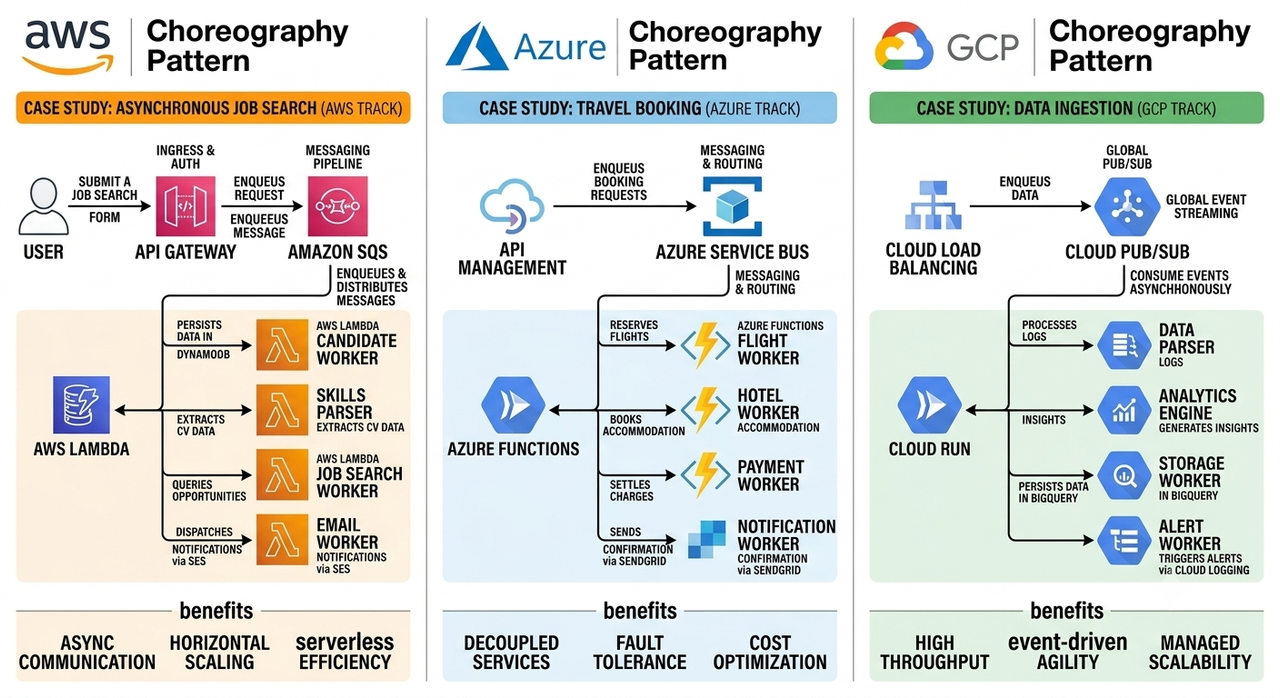
Figure 8: Cross-Cloud Choreography Pattern Production Architectures across AWS, Azure, and Google Cloud. (Source: Author's own illustration)
AWS Track: Asynchronous Job Search Processing
- Ingress & Ingestion: A candidate submits their profile via Amazon API Gateway, which enqueues the request in an Amazon SQS queue.
- Distributed Process: Multiple specialist AWS Lambda workers subscribe to the SQS queue concurrently:
- Candidate Worker: Persists the profile data into a dedicated Candidate DynamoDB table.
- Skills Parser: Executes a task (AWS Fargate or ECS) to parse the attached resume and extract key skills, publishing results to Amazon SNS.
- Job Search Worker: Triggered by the Skills SNS topic, queries the internal Job DynamoDB index for opportunities.
- Email Worker: Reacts to the profile ingestion and triggers an asynchronous validation email via Amazon SES.
Azure Track: Event-Driven Data Integration & Booking
- Ingress & Ingestion: Data arrives via Azure API Management, publishing events to an Azure Service Bus Topic.
- Distributed Process: Specialist Azure Functions and Azure Container Apps subscribe to Service Bus Subscriptions:
- Flight Worker / Ingest Function: Reserves flights or records data into Azure Blob Storage for archival.
- Hotel Worker / Analysis Function: Books accommodation or triggers analysis tasks, publishing insights to Azure Event Grid.
- Payment Worker / Rerouting Function: Settles customer charges or calls external partner APIs for localized indexing.
- Notification Worker: Listens for the completion message and dispatches customer confirmation via SendGrid.
GCP Track: Real-Time Event Stream Ingestion
- Ingress & Ingestion: Google Cloud Load Balancing routes ingestion requests to an API endpoint, which publishes messages to a managed Google Cloud Pub/Sub Topic.
- Distributed Process: Specialized Google Cloud Run containers consume Pub/Sub subscriptions pulled from the topic in parallel:
- Data Parser / Store Container: Writes the raw event data and processed logs into Google Cloud BigQuery for long-term analytics.
- Analytics Engine / Process Container: Performs real-time ETL on the incoming event stream, storing results and generating operational insights in Cloud Firestore.
- Storage Worker / Query Container: Triggered by updates in Firestore, executes concurrent searches on a managed Google Cloud Spanner table and persists structured data.
- Alert Worker: Reacts to processing anomalies by triggering asynchronous notifications through Google Cloud Logging and Cloud Functions.
Architectural Synthesis & Conclusion
Scalability in modern distributed cloud architectures is never solved simply by adding raw compute capacity or applying rudimentary autoscaling policies. True elasticity emerges from deliberate architectural boundaries that manage routing friction, decouple coordination, and govern asynchronous state:
- The Load Balancer Pattern establishes dependable ingress boundaries and cushions backend tiers through synchronous reverse proxies or asynchronous queue-based leveling.
- The Pipes and Filters Pattern decomposes monolithic data processing into modular, stateless filters connected by durable messaging buffers, enabling independent horizontal scaling across pipeline stages.
- The Scatter-Gather Pattern tames tail latency by broadcasting parallel execution across partitioned shards and consolidating partial results through timeout-governed aggregation.
- The Execution Orchestrator Pattern centralizes state machines, retry policies, and transactional rollback workflows without polluting downstream microservices with orchestration concerns.
- The Choreography Pattern maximizes throughput, fault tolerance, and organizational autonomy by letting domain workers react dynamically to event streams without a single point of coordination.
Architecting for scale requires recognizing the fundamental trade-offs between coupling, latency, consistency, and observability. Mastering these patterns equips you to navigate any cloud ecosystem—whether AWS, Azure, or Google Cloud—using managed primitives as intentional implementations rather than architectural crutches.
What's Next: Part 2/5
A scalable compute architecture is only as resilient as the data tier beneath it. Scaling across distributed boundaries inevitably stresses persistence layers, requiring specialized read/write separation, distributed coordination, and event-driven state models.
In the next installment of this series, Part 2/5: Performance & Data Consistency Patterns, we explore seven foundational patterns:
- MapReduce Pattern
- Saga Pattern
- Transactional Outbox Pattern
- Materialized View Pattern
- Command and Query Responsibility Segregation (CQRS)
- Distributed CQRS with Materialized Views
- Event Sourcing Pattern
About the author
- Multicloud & AI/ML Engineering Leader, Cloud Architect, and Forward Deployed AI Engineer building enterprise-grade ML, GenAI & Data solutions across AWS, Azure & GCP 🚀 Holding 4x GCP certifications (Professional Cloud Architect, Machine Learning, Data Engineering, GenAI), AWS Professional GenAI Developer, PMP® & CSM®. I bridge cloud architecture, AI product leadership, and agile delivery, with deep expertise in Kubernetes, Docker, cluster deployment, networking, storage & runtime troubleshooting. IBM CodeNet Winner, Call for Code Finalist & WiDS Datathon Winner. 🔥 On this blog, I share architectural breakdowns, hands-on deep dives & MLOps strategies for building resilient pipelines and production-ready GenAI and Agentic AI across multicloud. I also explore the Open GenAI lifecycle: Docker & Ollama workspaces, text/vision data, PEFT/QLoRA & diffusion fine-tuning, rigorous benchmarking, quantization, production RAG, FastAPI/MCP model serving, memory-enabled agents, and AI safety & more
Demystifying Complex Cloud Systems Through Design Patterns
A 5-part engineering deep dive into the architectural patterns governing modern cloud systems -- covering Scalability, Performance, Software Extensibility, Reliability, and Deployment across AWS, Azure, and Google Cloud (GCP).